






Our History
Background and Context
Established by The Bendigo Chinese Association Inc. and The Bendigo Chinese Association Museum Inc., the Golden Dragon Museum opened in 1991. It now houses a collection of some 30,000 objects being the most significant holding of Chinese heritage and cultural material in Australia.
The National Chinese Museum of Australia Ltd. was registered in 2017 to uplift the governance of the Museum and maintains an independent voluntary Board, five staff, several casuals and some 20 volunteers.
It operates as a Company Limited by Guarantee and reports to the Australian Charities and Not-for-profits Commission.
Donations to the Museum are tax deductible.
The Museum averages 30,000 – 40,000 paid admissions each year and it is estimated that at least that number again visit the Dai Gum San Precinct bringing total annual attendance to some 70,000 – 80,000 people.
The Precinct includes the Museum, Yi Yuan Gardens and Guan Yin Temple. Golden Dragon Museum is a living history of the Chinese people in Bendigo and of the Chinese diaspora across Australia more widely from the goldrush of the 1850s to the present day. In recent years the Museum has been going through a sustained period of revitalisation and growth across its offerings, programs and facilities which has seen it win several awards and citations.
Treasures of Time and Legacy
The Golden Dragon Museum has its roots in the Bendigo Chinese community and its long involvement with the Bendigo Easter Fair, now Festival.
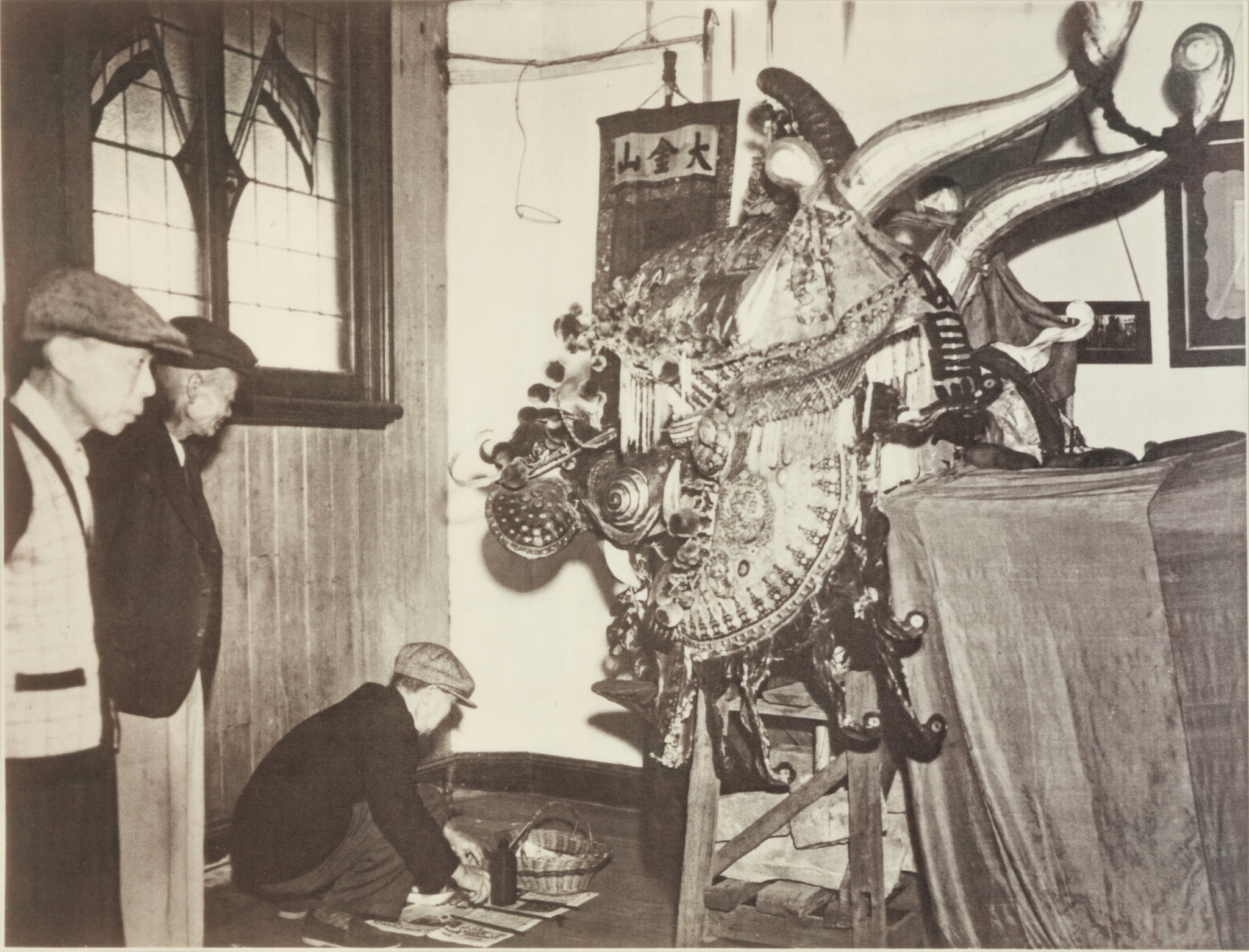
The first participation of the Chinese community in the Bendigo Easter Fair parade took place in 1879 and under the leadership of the ‘Chinese Easter Committee’, a permanent processional regalia collection was established in 1882 for use in the annual Easter charity event. This collection was housed in the Chinese Easter Fair Company’s warehouse at the Ironbark Chinese village until a devastating fire destroyed the processional collection’s home in 1912. In 1915 the Bendigo Chinese Association was established in a former shop building in the Bridge Street Chinatown and the surviving processional regalia, including the parade dragon Loong, were relocated there.
By the 1960s the Bendigo Chinese Association had become the only surviving organisation and building in the former Chinatown precinct on Bridge Street, and in the 1980s they began to lobby for support to build a museum to better house and display their impressive collection of historic and contemporary parade regalia and their famous dragons Loong and Sun Loong.
The Bendigo Chinese Association Museum was incorporated in March 1988 and after receiving state, local government, and private funding the Golden Dragon Museum was constructed on part of the old Chinatown site and was officially opened on 2 March 1991. The Museum was established to tell the story of Bendigo’s historic Chinese community and to house and display the Bendigo Chinese Association’s world significant processional collection, which includes the world’s oldest complete processional dragon Loong (1901).
The Museum’s Collection is a living collection and is the largest and most significant holding of Chinese heritage and cultural material in Australia. Several items in the Collection are of international significance. The processional regalia on display also includes the dragons Sun Loong (1970) and Dai Gum Loong (2019).
This unbroken history constitutes the most significant processional dragon collection in the world.